The heart of NUS IT infrastructure lies in its data centres (DC). The power-intensive IT equipment in the DCs typically takes up a huge amount of electricity since they are operating 24 by 7.
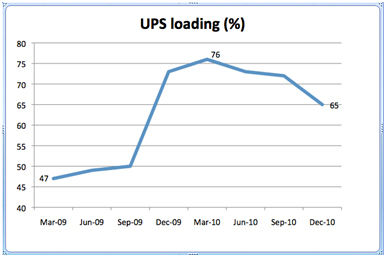
Computer Centre monitors this power consumption based on the loading level of its central uninterruptible power supply (UPS). As observed in the chart below, the trend has been moving up steadily since March 2009. By December 2009, the rising tide was so strong that it seemed to be unstoppable. This was largely attributed to the continuous growth of demand on IT resources required by the NUS community.
However, from the peak of 76% in March 2010, the trend has since turned south and we have miraculously reversed the rising tide. This is great news from the green computing perspective. (And honestly, we did not achieve this by shutting down your email or other IT resources!)
The reduction came about from implementing a few initiatives; one of which is our server virtualisation platform (some people call it ”cloud”) early last year. Most of the systems deployed in NUS today are virtual machines, which are much more efficient in terms of power consumption. We have also consolidated many of the existing systems onto the virtualisation platform, thereby powering down their hardware in the process. Last but not the least, our continuous effort to upgrade our systems to newer hardware and technology has led to more efficient power consumption.
We are hopeful that further initiatives in the pipeline will improve our overall power footprint, helping NUS in achieving its commitment to a greener future. We believe that technology innovation can help us do more with less power.
|



 RSS FEED